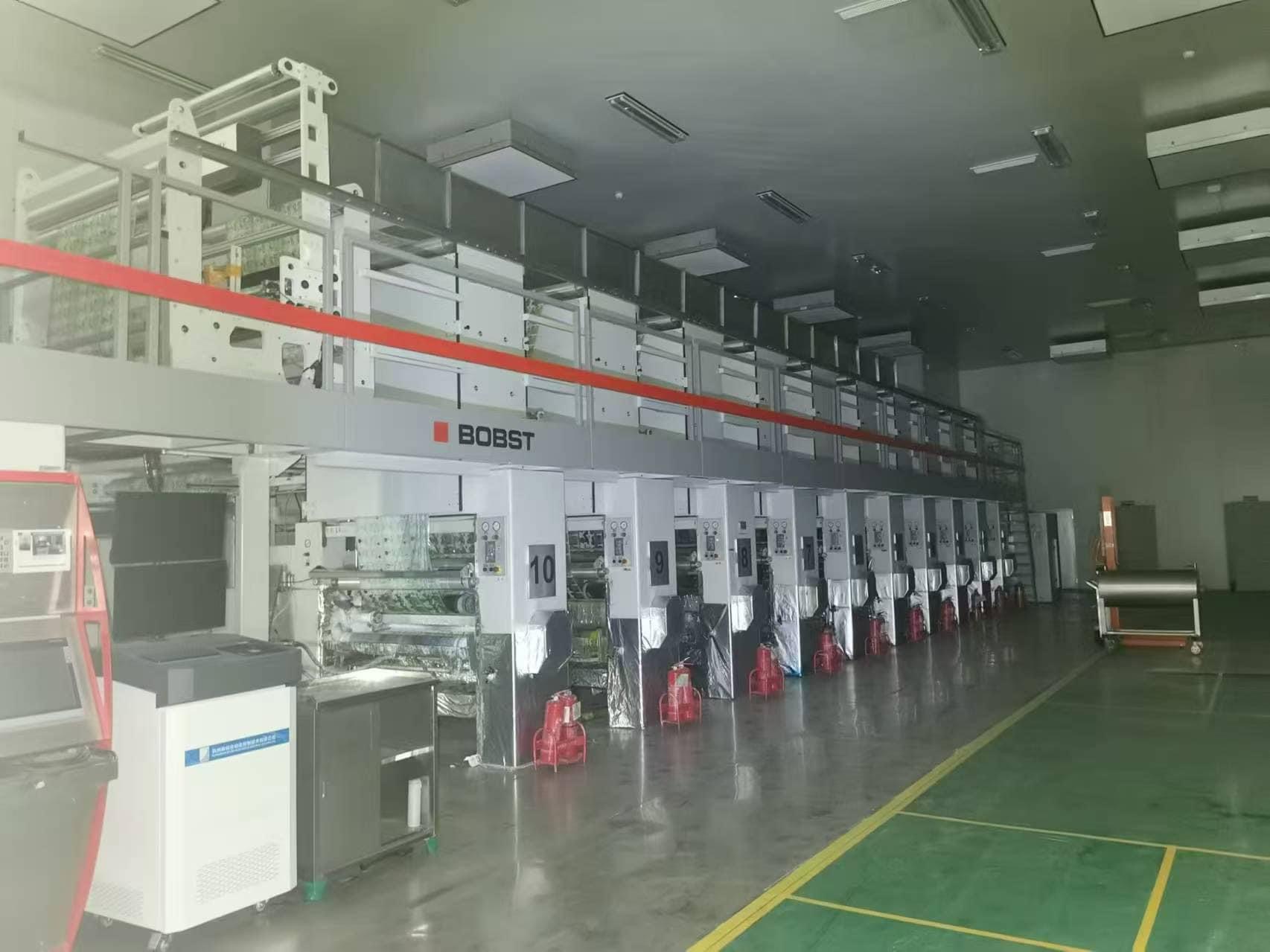
Buying a used Central Impression (CI) flexographic printing press involves much more than comparing the manufacturing year, printing width, number of colors and maximum production speed.
For a second-hand CI flexo press, the more important question is whether the machine can still deliver stable and repeatable production under real operating conditions.
This is where a Factory Acceptance Test, commonly referred to as FAT, becomes important.
A FAT should not simply demonstrate that the machine can start, run and reach a certain speed.
The real purpose of FAT is to verify what the machine can reliably demonstrate under clearly agreed test conditions before payment and shipment.
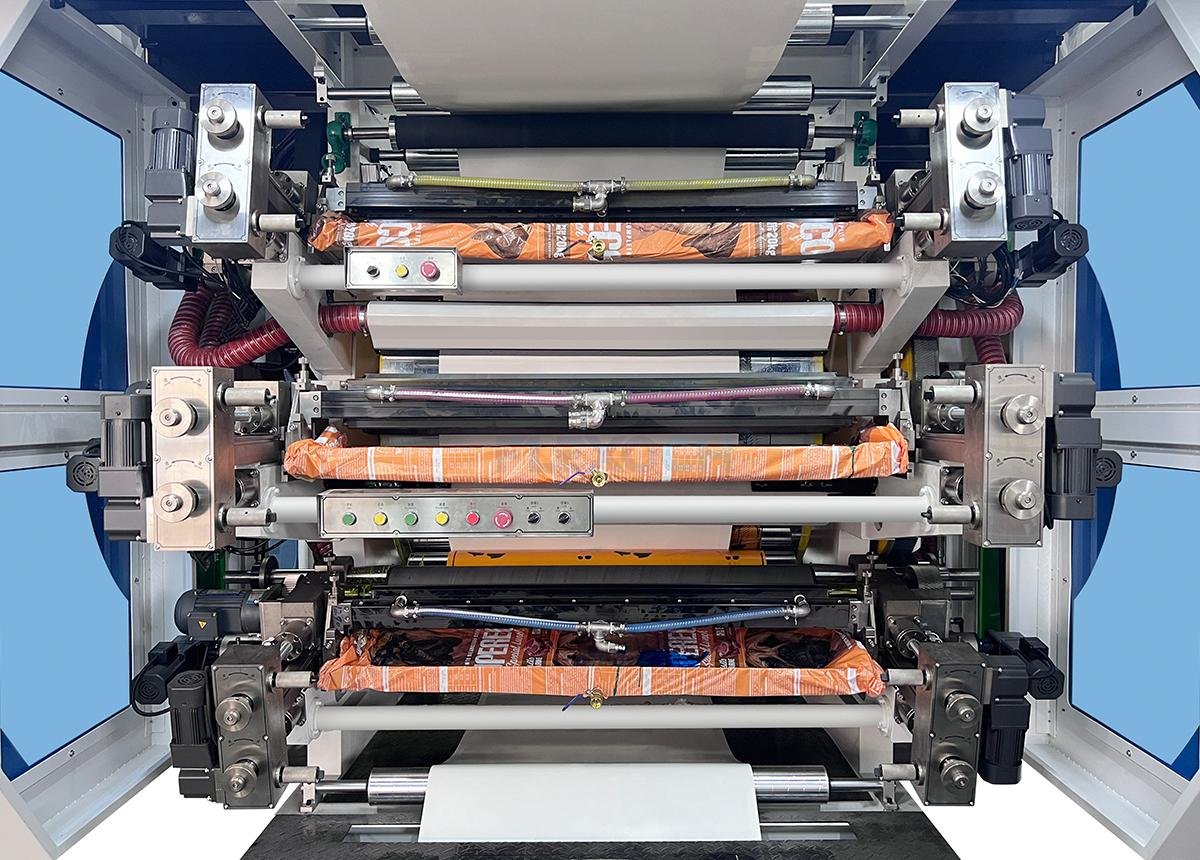
Why FAT Matters When Buying a Used CI Flexographic Press
Used printing machines have different operating histories.
Two CI flexographic presses of the same model and manufacturing year may have very different mechanical conditions, maintenance histories and remaining service life.
Before payment, buyers usually want to understand:
- whether registration remains stable
- whether tension control performs correctly
- whether the CI drum is mechanically sound
- whether servo drives and motors operate normally
- whether the press can run at the agreed production speed
- whether print quality remains consistent
- which accessories and spare parts are included
A well-planned FAT helps turn these questions into measurable checks.
1. Inspect the Central Impression Drum
The central impression drum is one of the most critical components of a CI flexographic printing press.
Its condition can directly influence registration accuracy and printing stability.
Important inspection points may include:
- CI drum surface condition
- drum runout
- concentricity
- bearing condition
- abnormal noise
- vibration
- temperature during continuous operation
- general mechanical stability
Some issues can be observed during a normal machine trial.
Other checks require precision instruments and qualified technicians.
This distinction is important.
Watching a machine run is not the same as measuring its mechanical condition.
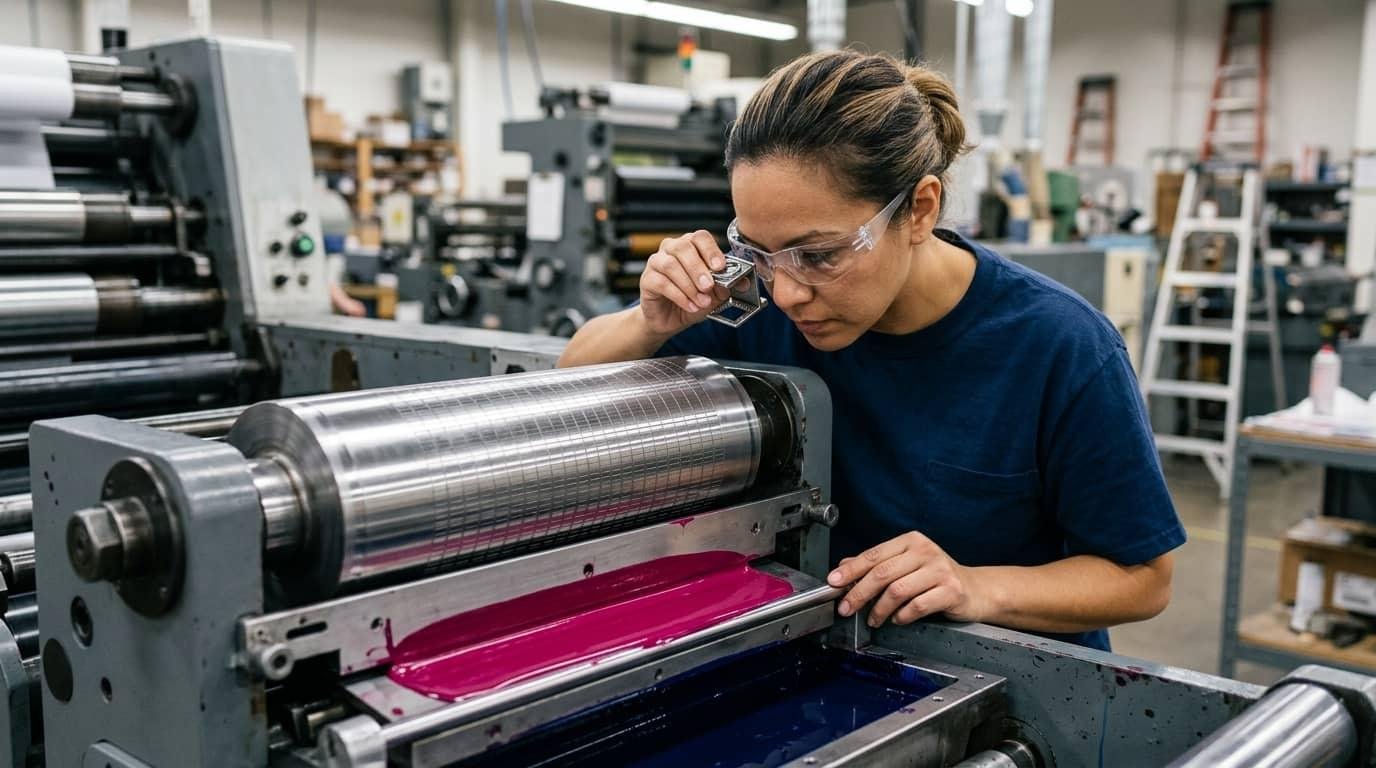
2. Check Registration and Web Tension Stability
Registration performance is not controlled by a single system.
Stable printing depends on the interaction between:
- unwinding
- rewinding
- web tension
- servo motors
- drive systems
- web guiding
- acceleration
- deceleration
- substrate properties
- printing parameters
This becomes particularly important when printing thin or extensible films.
A machine may show acceptable registration at a stable low speed but behave differently during acceleration or higher-speed production.
For this reason, registration should be evaluated together with the complete web handling system.
Stable printing is the result of the entire system working together.
3. Perform Printing Trials With Relevant Film Materials
Whenever possible, the FAT should use substrates similar to the buyer's actual production materials.
For flexible packaging applications, common test materials may include:
- BOPP
- PET
- PE
- other films used in the buyer's production
However, the film itself is only one part of the printing trial.
Results are also affected by:
- printing plates
- sleeves
- anilox rollers
- inks
- drying conditions
- machine speed
- web tension
- registration parameters
During the printing trial, buyers may want to evaluate:
- registration stability
- print consistency
- ink transfer
- streaking
- color-to-color alignment
- printing performance at agreed speeds
- behavior during acceleration and deceleration
- drying performance
One point should be clearly understood:
Reaching the maximum machine speed does not automatically prove stable production.
The FAT should define which speed will be tested and what result will be considered acceptable.
4. Inspect the Printing Units and Supporting Systems
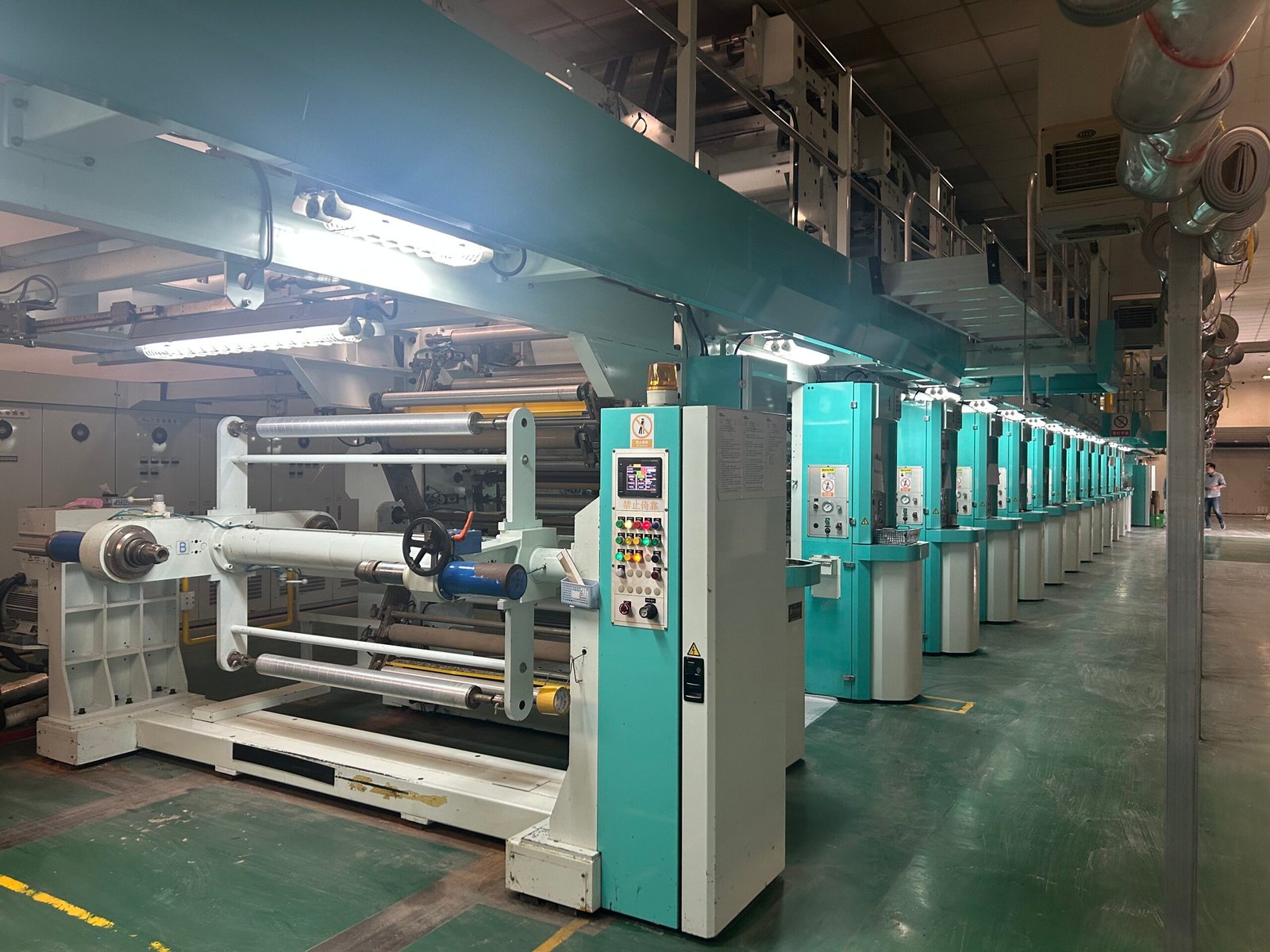
A CI flexographic press is a complete production system.
The condition of the central drum alone does not determine the overall performance of the machine.
Other important inspection areas may include:
- anilox rollers
- printing sleeves
- sleeve adaptors
- doctor blade chambers
- ink circulation systems
- drying units
- ventilation systems
- electrical cabinets
- PLC
- HMI
- servo drives
- web guiding systems
- unwind and rewind systems
The buyer should also confirm which accessories are included with the machine.
For example:
- number of sleeves
- number of anilox rollers
- adaptors
- spare parts
- tools
- maintenance documentation
These details should be listed clearly before shipment.
5. OEM Inspection, Third-Party Inspection and Seller FAT Are Not the Same
This is an important point in many used machinery negotiations.
A buyer may request:
- OEM technical inspection
- OEM inspection report
- manufacturer warranty
- third-party inspection
- seller-organized FAT
These are different services.
OEM Inspection
An inspection carried out by the original equipment manufacturer may require a separate paid technical service.
Whether the OEM can issue an official report or provide an OEM-backed warranty depends on the manufacturer's own policy.
Third-Party Inspection
A third-party inspection company can provide an independent assessment within an agreed inspection scope.
Seller-Organized FAT
A seller-organized FAT demonstrates the machine's operating and printing performance under defined test conditions.
These three forms of inspection should not automatically be treated as equivalent.
Before the test begins, both parties should agree on who performs each inspection, what will be measured and what documents will be issued.
6. Agree on FAT Acceptance Criteria Before Testing
A FAT becomes much more useful when the buyer and seller agree on the acceptance criteria before the machine starts running.
Important points may include:
- Which substrate will be used?
- How many colors will be printed?
- Who will provide printing plates?
- Who will provide sleeves?
- Who will provide inks?
- Which production speeds will be tested?
- What registration tolerance will be accepted?
- How long will the machine run?
- Which measurements require specialist instruments?
- Will an OEM engineer or third-party inspector be involved?
- Who will pay for external inspection or consumables?
- What happens if an agreed acceptance item is not achieved?
The FAT results may then be documented using:
- inspection records
- measurement reports
- printed samples
- photos
- videos
- FAT acceptance records
This helps avoid a common problem:
the buyer and seller watching the same test but reaching different conclusions about whether the machine passed.
7. FAT Is Not the Same as Warranty
A successful FAT is important, but it cannot predict every future mechanical failure.
The operating conditions at the seller's factory may also be different from those at the buyer's factory.
After relocation, machine performance may be affected by:
- installation quality
- electrical supply
- compressed air
- ventilation
- ink systems
- environmental conditions
- operator experience
- maintenance
- substrate quality
For this reason, four areas should be defined separately:
FAT
What was tested before shipment.
Warranty
What responsibility the seller accepts after the sale.
Installation
Who is responsible for installation and commissioning after relocation.
After-Sales Support
What technical support will be available later.
These areas are related, but they are not the same.
8. What Should Be Verified Before Payment?
For a high-value used CI flexographic printing press, the discussion before payment should go beyond price.
The buyer should understand:
- the actual machine condition
- which components have been inspected
- which items have been measured
- which materials were used during the printing trial
- which speeds were tested
- which accessories are included
- what evidence has been provided
- what warranty is included
- what technical support is available
For the seller, the same clarity is equally important.
The seller should provide reasonable evidence while clearly defining the limits of FAT and warranty responsibility.
Final Thoughts
A successful FAT for a used CI flexographic printing press should mean more than:
"The machine was running."
The real value of FAT is understanding:
- what was tested
- how it was tested
- under which conditions
- what the results proved
- which risks still remain after the test
A good FAT does not remove every risk. It makes the remaining risks clearer before the machine is shipped.
For buyers considering a second-hand CI flexographic press, this is often more valuable than simply watching the machine complete a short demonstration.
Lisa Yan
Used Printing & Packaging Machinery | IusedMachine